LAKE AREA RESIDENT JACQUE JEFFORDS:
Surrender is not the word to describe him
Story By Tammy Witherspoon
“When you get captured, throw your hands up in the air, and surrender total control of yourself, you lose something you can’t ever get back,” says Jacque Jeffords quietly. “Other POWs have talked to me and said the same thing.”
Nov. 11, 1950, Jeffords’ plane was shot down near the Yalu River in Korea. He managed to elude capture for three days before being caught by a couple of teenagers with “burp” guns. He was 21 and would spend the next three years of his life as a prisoner of war.
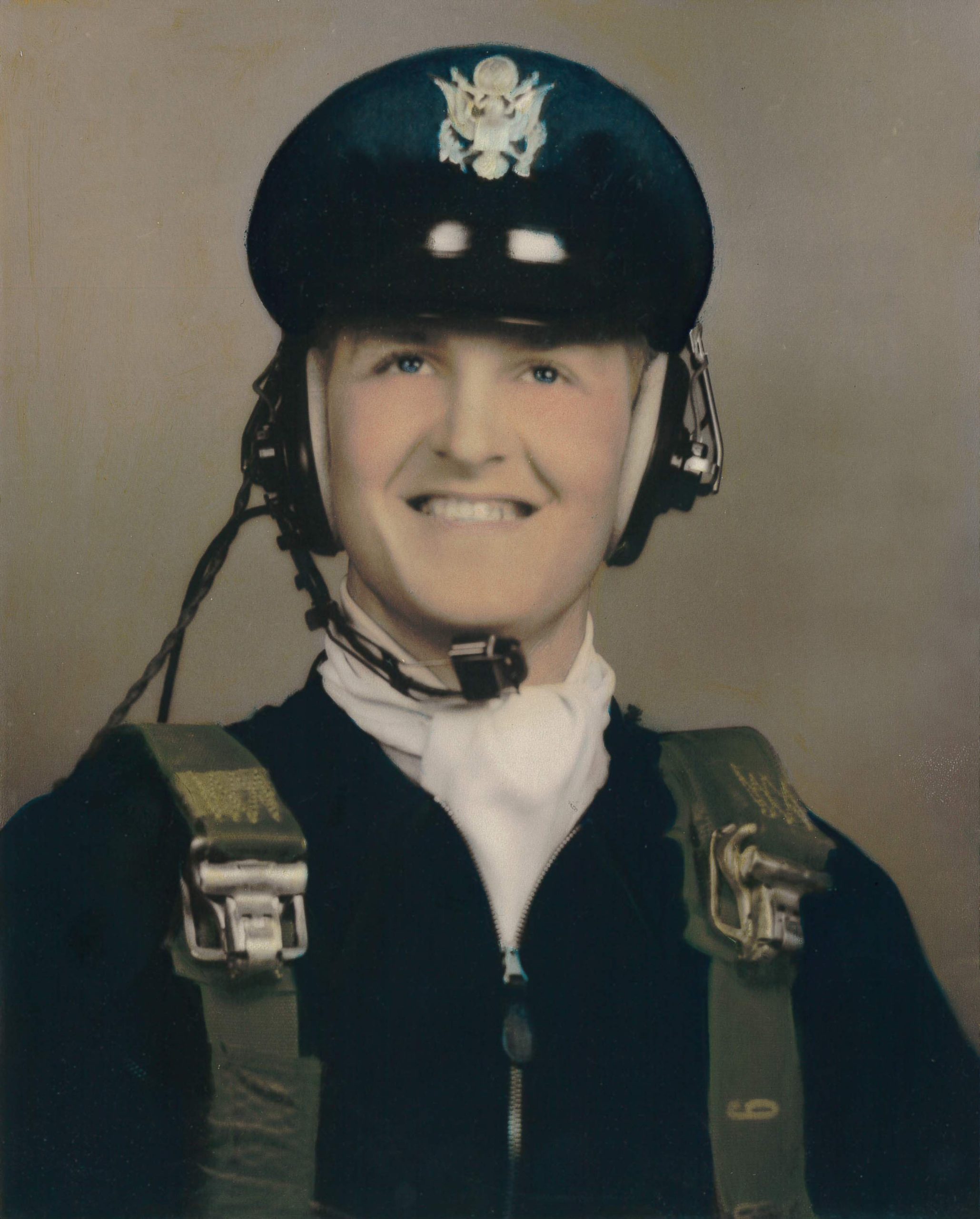
However, those three years do not define Jeffords’ life. After being repatriated, he stayed in the Air Force and went on to become a pilot, though he only had a high school education.
After a successful military career he and his wife JoAnn moved to the lake area, where he has remained active in community service.
Surrender is not a word that could be used to describe Jeffords.
BEGINNINGS
Jeffords was born in Mullen, Neb. to John and Grace Coker Jeffords. Jeffords was an only child and his mother died when he was four.
After his wife died John took his young son to live with his widowed mother. The experience of knowing how to talk with grandmothers would come in handy with his future wife’s grandmother.
Jeffords started first grade in a one-room schoolhouse called the Wild Onion School. The class consisted of him and 12 girls.
He then went back to Mullen to live with his father’s sister. His father worked on her ranch and Jeffords grew up working on a ranch.
After he was graduated from high school, Jeffords worked in construction. He then followed his father to Arizona, where he worked on another ranch. On the weekends they looked for gold and often found some.
They returned to Nebraska after a year, again doing just ranch work. A combination of working cattle and temperatures 25 to 30 degrees below zero helped make a fateful decision.
While helping his uncle bring cattle down from the mountains during a blizzard, Jeffords decided he wanted a different life. He went to visit an Air Force recruiter and began the next stage of his life.
PRISONER OF WAR
Jeffords shipped out to Sheppard Air Force Base in Wichita Falls, Texas, Valentine’s Day, 1949, where he went through basic training.
He was stationed at Chanute Air Force Base in Illinois, where he went through Aircraft and Engine School.
Jeffords trained in repairing the engine used in the B-26 plane. He then was stationed at Langley Air Force Base in Virginia. Jeffords was assigned as crew chief to a reconnaissance unit.
July 4, 1950, Jeffords was asked to volunteer to go overseas. He was told to pack and be ready to leave in two hours.
The B-26s were sent to Johnson Field, which was just outside of Tokyo, Japan, where they were outfitted with bomb racks. They were then stationed at Iwakuni, Japan. The base was run by the Australians as part of the United Nations forces.
Jeffords’ first mission over Korea was in late July. The B-26s would fly in groups of four with the lead bomber dropping the bombs first and the others following suit.
Nov. 11, after flying several successful missions, Jeffords’ plane was hit by a burst from an anti-aircraft gun in the left engine. The pilot turned south and tried to make it to the American front lines, which were 60 miles away.
They didn’t make it. The plane was on fire and the bombs were covered with oil. The pilot and the gunner ejected, but Jeffords couldn’t because his canopy wouldn’t blow off. He moved into the pilot’s seat and with just a foot of space to maneuver in, was able to tumble out of the plane.
With no training in parachuting, Jeffords landed safely, so close to a huge fire, his parachute burned up. He was able to get free from the harness and run away from the fire.
“Because the pilot and the gunner had ejected before me, they were captured immediately,” says Jeffords.
Jeffords tried to head south, towards the front lines, but was caught within three days. He woke up on the third morning to find two teenagers holding an extremely dangerous gun on him and they were fighting over who got to take him.
Jeffords was turned over to the North Koreans and taken to a town the Americans had just bombed. The people wanted to kill him and would have if the soldiers hadn’t stopped them.
He was interrogated and tortured for a month. Jeffords says the Koreans didn’t recognize the rules of the Geneva Convention. “This was also the time brainwashing really started. They couldn’t say how good Communism was, they concentrated on how bad America was,” says Jeffords.
In December Jeffords was moved to a camp that housed 25 prisoners and was reunited with his pilot and gunner. Before long they were joined by 3,000 other prisoners.
Prisoners were given minimal food, and death was a constant companion. In January, the prisoners were moved north during the night. They had to walk 90 miles in temperatures that were 15 to 20 degrees below zero. Even the guards suffered and one died.
Asked if he hated his captors, Jeffords shakes his head. “They were almost in the same shape we were in. During that march, POWs were helping the guards make it,” he says softly.
At the new camp there were Turkish and Australian prisoners. The brainwashing continued. The prisoners were required to attend anti-American classes and religion was not allowed.
Jeffords says he prayed a lot and made deals with God promising all kinds of things he would do if God would get him home.
“I tell my church God knew I was lying and he still got me out, so that proves how much he loves us,” says Jeffords with a laugh.
Jeffords was later taken to Camp 3, a hard labor camp, where he would stay until he was repatriated. The camp was for prisoners who didn’t cooperate.
During the first two years of Jeffords’ imprisonment, his family had no idea what had happened to him. He was listed as missing in action, then they found out he was a prisoner of war.
Early in 1953, the prisoners began to hear rumors negotiations about their release were going on. In July Jeffords and 40 other prisoners were told they would be prosecuted.
They were loaded onto trucks and driven 30 miles to a place where they were given new clothes. Another month went by and they were finally told they would be repatriated.
Jeffords said as they got close to the place where the prisoners would be released, he asked one of the guards who had been with them for a long time to come with them.
“I told him I would get him a job,” said Jeffords. The guard said no, that his life was in China. The guard also told him that one day both of them would be sad because their grandchildren would fight each other.
Jeffords’ group was the last to come out. When they drove into Panmunjon, they saw the American flag and Jeffords says he got tears in his eyes.
An Air Force general shook his hand and welcomed him back home. He was then given new clothes and anything he wanted to eat. Jeffords says he couldn’t eat much and wanted to take the rest with him. He weighed 175 pounds when he was captured and 129 pounds when he was repatriated.
Jeffords was taken to Fitzsimmons Hospital and treated for malnourishment and dysentery. He spent three months in the hospital before being released.
THE MILITARY LIFE
Jeffords says he decided to stay in the military because it was like family to him. After being released from the hospital, he took a one-month leave and got his choice of assignments.
He took an assignment in West Palm Beach, Fla., and became the crew chief to an amphibian rescue squadron.
Jeffords was perfectly content to stay where he was at, however the Air Force needed pilots and his commander sent him to Macon, Ga. to take the physical and written tests.
Jeffords didn’t think he would make it. The room was full of college graduates and he was a high school graduate.
He qualified to be a pilot and a navigator, and chose to be a pilot. However, he didn’t want to either. He had made staff sergeant and didn’t want to have to start over. His commanding officer had other ideas. He threatened to court martial Jeffords if he didn’t take the training.
Jeffords started Aviation Cadet Training at Lackland Air Force Base. After basic training the cadets were sent to Malden for pilot training. Jeffords had trained in repairing the engine used in the B-26 and had some trouble with the mathematics that was required but says another man tutored him and helped him through it.
He says he was proud to have the opportunity to become a pilot when he only had a high school education.
Jeffords was asked what he wanted to fly, fighter planes or twin engines. He said he would like to fly fighters. The instructor told him, “Jeffords, you’re so slow, you’d still be reaching for your helmet when everyone is at 18,000 feet.”
While at Malden, Jeffords met JoAnn Massingham at the Cadet Club. It was actually sort of a blind date, at least on her part. “He had seen me,” says JoAnn. “But I hadn’t seen him. He was this tall, slim young man who was fun to be around.”
However, Jeffords had to be careful. JoAnn was the daughter of the Butler County Sheriff. He had an ace up his sleeve though, he had the support of her grandmother. “Because he lived with his grandmother and his aunt, he knew how to talk to old ladies,” says JoAnn.
The couple were married soon after Jeffords was graduated in August 1955 as a second lieutenant. They celebrated their 50 year anniversary Saturday, Aug. 6.
“I told her if she married me, the military would always come first, but if she would hang in there, we would have a good life,” says Jeffords.
“And we have,” says JoAnn. She smiles broadly when asked if she knew what she was in for. “Absolutely not,” she says.
Jeffords was assigned to the 11th Strategic Air Command Refueling Squadron. Jeffords’ job was to refuel planes midair. The young couple moved to Abilene, Texas.
While living in Abilene, the Jeffords had two children, John and Judy. Jeffords was frequently gone from home and JoAnn came to rely on the military family.
The women would watch the other houses, and if a car pulled up with just one officer in it things were usually okay, says Jeffords. “But if two people came to the door it meant bad news.”
“The military always treated our family well,” says JoAnn. “We always felt safe and our children always felt safe. And they always had plenty to do.”
Jeffords was next stationed at Dover Air Force Base in Delaware. While there, he had to have back surgery and ended up being taken off of flight status.
His next assignment was at Beale Air Force Base in California where he was the maintenance officer for the Air Force.
Then Jeffords was named Deputy Commander on Shemya, a small island close to Russia. It was a rough time for JoAnn because he was gone for almost a year.
During that year she received a call from Jeffords’ commander, telling her Jacque was all right. Apparently one of the planes had crashed but Jeffords wasn’t on it.
Jeffords achieved the rank of lieutenant colonel and served as a squadron commander, a member of the SAC Inspection General Team and on the Logistic Staff at SAC. He decided to retire after 28 years in the Air Force.
Before retiring, the Jeffords’ visited one of Jacque’s military buddies who lived in the lake area. The couple wanted a place on the water and decided to move to the lake where Jeffords built his house with the help of his friend.
RETIREMENT
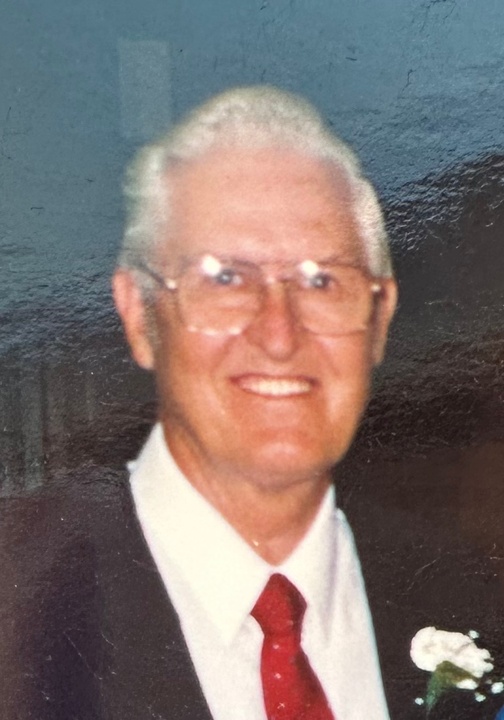
Since retiring, Jeffords remains busy. His house is filled with his paintings. He served on the Four Seasons Architectural Committee. In the early 1990s, he was elected to the Lake Ozark Fire Protection Board and still serves on the board today.
He and JoAnn have traveled extensively, taking trips to London, Paris, Scotland, Ireland and Russia. They have also visited every state in the United States.
TRIP BACK TO KOREA
In 1991, Jeffords took JoAnn to Korea. The trip was for any veteran of the Korean War and their families. The plane had a few POWs on it.
“We didn’t go to where Jacque was held as a prisoner,” says JoAnn. “But the Bridge of No Return was very emotional for him.”
“I really felt it,” says Jeffords, voice breaking for a moment. “I was thinking of those guys laying in those hills who never got a chance to come home.”
“We had name tags that had our names in English and Korean,” says JoAnn. “Little folks kept coming up, looking at his name tag and hugging him. They told him he saved their country.”
“Did you know that 21 men refused to come back,” asks Jeffords. “I think there are only a few of them left now, maybe three.”
Jeffords makes an effort to keep in contact with other POWs and goes to the reunions. “POWs look forward to reunions because they can relate to each other. We understand each other,” says Jeffords.
FINAL THOUGHTS
“The military today is a volunteer service,” says Jeffords. “If you can read and write you can see what happens in the military. When you sign up the president is your Commander in Chief. You take an oath. Sometimes you don’t like where you end up.
“People should show more respect for each other. I hate to hear people criticize the military so much. There is so much negativity. Civilians don’t understand the sacrifices that are made and the things you have to give up.”
Asked if she would do it all again, JoAnn smiles and says, “Absolutely.”
Jeffords gives a wry smile, “I’d do it all again except for that three-year part in Korea.”
Source:
The Eldon Advertiser
November 10, 2005